Home / Blogs 

Digital Onboarding Workflow Gaps: How Banks and NBFCs Can Improve Routing and Decision Quality

Digital onboarding workflow gaps in BFSI onboarding

4 minutes read

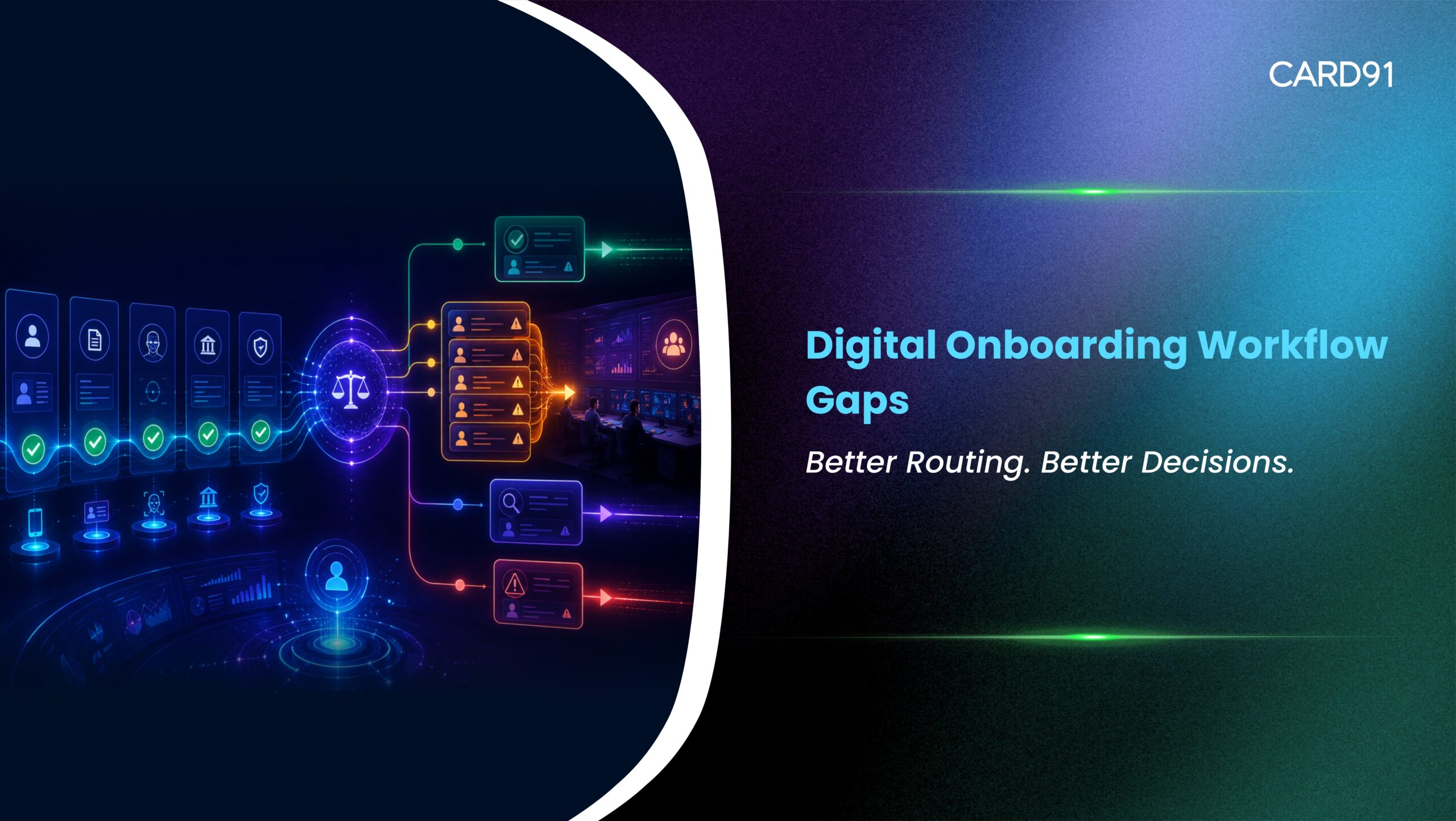
Digital onboarding workflow gaps appear when the workflow cannot consistently move cases into the right path after signals are assessed. For banks and NBFCs, reducing digital onboarding workflow gaps is essential for improving routing, reducing unnecessary review, and strengthening decision quality.

A case may be strong enough to move forward but still land in review. Another may only need more clarity but get treated like a sensitive exception. Over time, these routing gaps increase manual effort, delay good cases, and weaken decision consistency.

What are digital onboarding workflow gaps?

Digital onboarding workflow gaps happen when the system does not separate clearly between:

  • cases ready for approval
  • cases that need review
  • cases that should be rejected
  • cases that need more clarity before a final decision

That matters because a strong onboarding workflow should do more than collect and verify information. It should know what the next action should be.

This is also why Verification Intelligence in Onboarding: What BFSI Teams Need Beyond Basic KYC and What Happens After Verification in BFSI Onboarding?

Why Post-Verification Decisioning Is the Missing Layer are closely connected to this topic.

Why digital onboarding workflow gaps happen

Most digital onboarding workflow gaps do not begin at the start of onboarding. They usually show up after checks are completed.

A case may move through verification correctly and still create friction because:

  • unclear cases are pushed into the wrong queue
  • low-confidence cases are treated like high-risk cases
  • clarification and review are mixed together
  • similar cases are routed differently across teams

This is also why Why BFSI Onboarding Still Depends on Manual Reviews — And What Needs to Change and Why Fragmented Verification Slows BFSI Decision-Making — Even After KYC Is Complete remain relevant.

How digital onboarding workflow gaps affect BFSI onboarding

When workflow gaps are not addressed, the effect is immediate:

  • good cases get delayed
  • review queues become overloaded
  • teams lose routing consistency
  • operational control weakens

A strong BFSI onboarding workflow should answer one question clearly:

What should happen next to this case?

That means the workflow should be able to:

  • move decision-ready cases forward
  • send true exception cases into review
  • reject cases that clearly should not proceed
  • use clarification only when more information is needed before a final decision

How banks and NBFCs can reduce digital onboarding workflow gaps


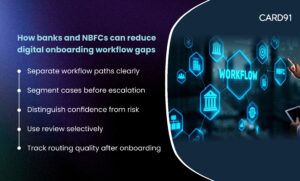
1. Separate workflow paths clearly

Approve, review, and reject should be distinct decision outcomes. Clarification should support the workflow when more information is needed, not act as a hidden review bucket.

2. Segment cases before escalation

Not every unclear case belongs in review. Stronger workflows separate decision-ready, clarification, review, and negative-outcome cases earlier.

This is also why BFSI Onboarding Case Segmentation: How Banks and NBFCs Can Improve Speed and Control matters operationally.

3. Distinguish confidence from risk

A low-confidence case is not always a high-risk case. That distinction is essential for cleaner routing.

That is why What Is a Confidence Score in BFSI Onboarding? Why It Matters More Than Risk Scores is important.

4. Use review selectively

Manual review should be reserved for decision-sensitive cases where human judgment adds real value.

This connects directly to What Should Trigger Manual Review in BFSI Onboarding? A Practical Decision Framework.

5. Track routing quality after onboarding

If teams do not measure where cases are going and why, workflow gaps stay hidden.

That is where BFSI Onboarding Operations Metrics: What Good Ops Teams Track After Onboarding fits naturally.

Where CARD91 fits

CARD91’s VerifyIQ is relevant here because stronger routing depends on stronger upstream signal interpretation.

A better digital onboarding workflow needs more than completed checks. It needs clearer case movement across approve, review, reject, and supporting clarification processes.

That is why VerifyIQ fits naturally into this problem. It helps teams move from fragmented signals to cleaner workflow action.

Key takeaways

  • Digital onboarding workflow gaps happen when cases are not routed into the right path consistently.
  • Review, reject, and clarification should not blur into each other.
  • Better segmentation and clearer decision logic improve speed and control.
  • Stronger BFSI onboarding depends on better routing after verification.
  • Better upstream interpretation leads to better downstream queue quality.

Final thought

A digital onboarding workflow does not become better just because it collects more signals.

It becomes better when it knows what to do with those signals next.

That is how banks and NBFCs reduce workflow gaps without losing control.

Book a VerifyIQ demo

FAQs

Q: What are digital onboarding workflow gaps?

A: They are breakdowns that happen when the workflow cannot consistently move cases into the right path after verification and signal assessment.

Q: Why do workflow gaps matter in BFSI onboarding?

A: Because they delay good cases, overload review teams, and reduce decision consistency.

Q: How can banks reduce digital onboarding workflow gaps?

A: By improving case segmentation, separating workflow paths clearly, distinguishing confidence from risk, and using review more selectively.

Q: Is clarification the same as review?

A: No. Clarification is a supporting process for recoverable cases. Review is a decision path for cases needing human judgment.

Q: How does VerifyIQ help?

A: VerifyIQ helps improve signal interpretation and routing so cases can move through clearer onboarding workflow paths.

Share this post

Read more

4 minutes read

In a world that has moved to the internet and the mobile, data privacy is paramount. This is more evident

3 minutes read

As India advances in its digital transformation journey, the payments landscape is rapidly evolving

Start modernising your payments with CARD91 infrastructure

To know more about our offerings connect with our experts