Home / Blogs 

Queue Priority in BFSI Onboarding: How Ops Teams Should Triage Cases

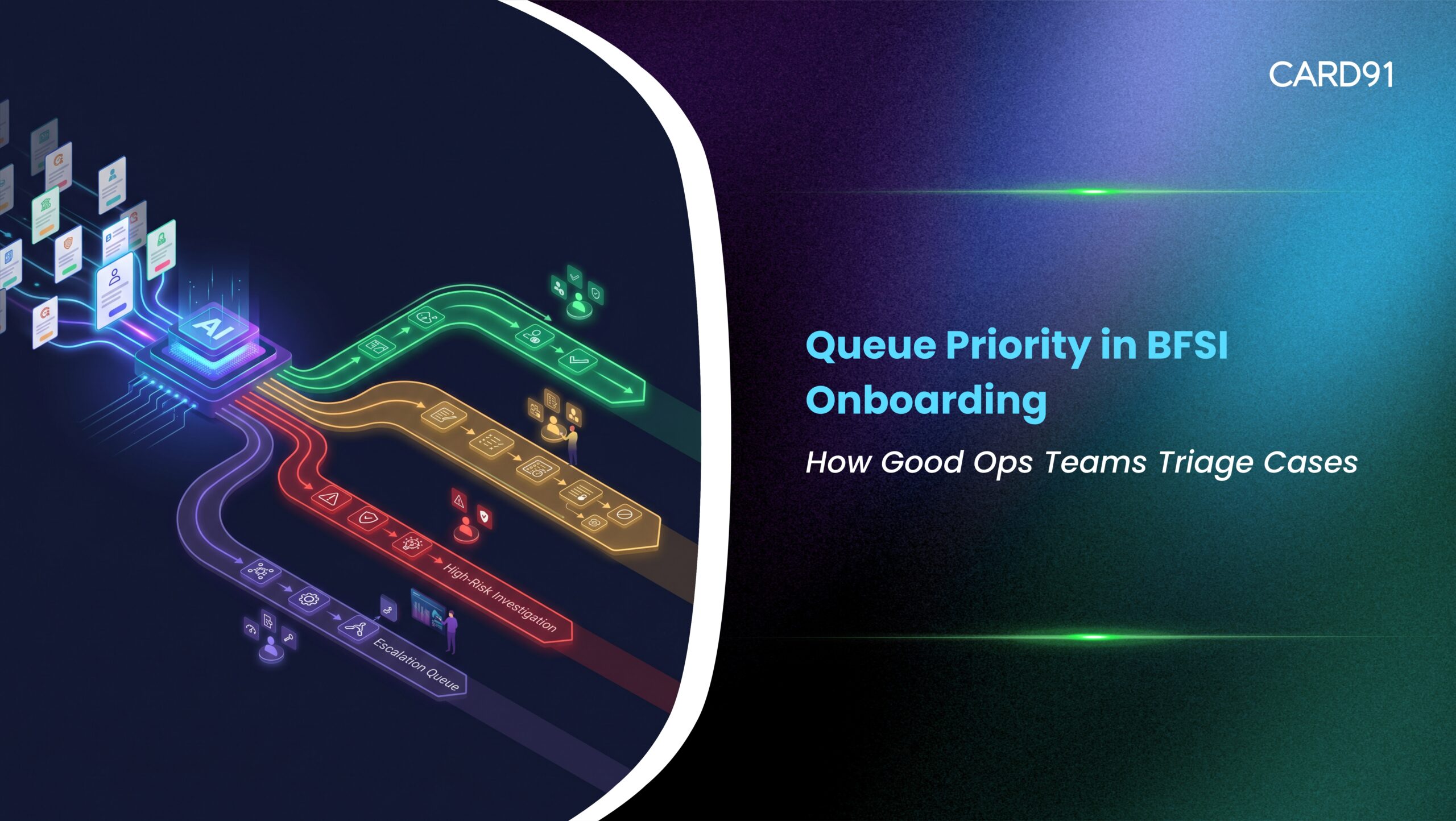
Queue priority in BFSI onboarding for better digital onboarding triage

3 minutes read

Queue priority in BFSI onboarding matters because not every case deserves the same urgency.

But many workflows still treat them that way.

A low-friction case, a clarification case, and a genuinely sensitive review case often end up in the same queue with no clear priority logic. When that happens, good cases wait too long, exception handling gets diluted, and operations teams lose control over what needs attention first.

For banks, NBFCs, and broader BFSI teams, strong digital onboarding is not only about routing cases into the right path. It is also about deciding which cases should be handled first once they enter that path.

What is queue priority in BFSI onboarding?

Queue priority in BFSI onboarding is the logic used to decide the order in which cases should be handled after they enter a workflow queue.

In practical terms, good triage should reflect:

  • decision sensitivity
  • business impact
  • recoverability
  • operational urgency
  • control importance


That matters because a strong onboarding workflow should not only separate cases into approve, review, reject, or clarification paths. It should also know which cases deserve faster attention inside those paths.

This is also why BFSI Onboarding Workflow Design: How Teams Should Structure Approve, Review, and Reject Decisions and Designing Exception Queues in Digital Onboarding: What Good BFSI Ops Teams Do Differently connect so closely with queue design.

Why poor queue priority slows digital onboarding

When queue priority is weak, everything becomes flatter than it should be.

That usually creates four problems:

  • high-value or sensitive cases wait too long
  • low-friction cases consume attention they should not
  • review teams lose focus on true exception work
  • workflow speed drops without improving control

This is one of the reasons Why BFSI Onboarding Still Depends on Manual Reviews — And What Needs to Change remains such an operational issue.

How queue priority in BFSI onboarding should work

A stronger queue-priority model should help teams:

  • move decision-ready cases faster
  • isolate true exception cases earlier
  • reduce unnecessary waiting for recoverable cases
  • protect reviewer time for high-impact decisions
  • improve consistency across ops queues

In other words, queue priority improves both speed and control.

Where queue priority usually breaks

1. Everything gets treated as equally important

If all review cases enter one flat queue, prioritization disappears.

2. Clarification cases are mixed with sensitive cases

Cases that only need more information should not compete directly with high-impact review cases.

3. Queue order follows arrival, not importance

First-in-first-out may be simple, but it is not always right for onboarding operations.

4. Priority is not tied to routing quality

If the workflow sends the wrong cases into the wrong queue, even good triage cannot fully fix the problem.

That is also why Digital Onboarding Workflow Gaps: How Banks and NBFCs Can Improve Routing and Decision Quality matters so much upstream.

What stronger BFSI ops teams do differently

1. They separate queue types first

They do not try to prioritize everything inside one blended backlog.

They separate:

  • review queues
  • clarification queues
  • negative-outcome handling
  • decision-ready fast paths


This also supports the logic behind BFSI Onboarding Case Segmentation: How Banks and NBFCs Can Improve Speed and Control.

2. They prioritize by decision impact

Not every case has the same operational importance.

Better teams look at:

  • control sensitivity
  • potential business delay
  • ambiguity level
  • whether the wrong decision would create meaningful downstream impact

3. They do not confuse low confidence with high urgency

A low-confidence case may need more clarity, but it does not automatically deserve the same priority as a truly sensitive exception.

This is where What Is a Confidence Score in BFSI Onboarding? Why It Matters More Than Risk Scores becomes useful in workflow design.

4. They measure queue quality, not just queue volume

Queue health is not just about how many cases are waiting.

It is also about:

  • whether the right cases are entering the right queue
  • whether priority is improving outcomes
  • whether queue structure is reducing avoidable delay


That is closely connected to BFSI Onboarding Operations Metrics: What Good Ops Teams Track After Onboarding.

Where CARD91 fits

CARD91’s VerifyIQ fits naturally into this problem because stronger queue priority depends on better upstream routing, signal interpretation, and confidence-led triage.

That matters because triage works best when the system already knows which cases belong in which path before operations teams start prioritizing them.

Key takeaways

  • Queue priority in BFSI onboarding should reflect impact, not just arrival order.

  • Review, clarification, and decision-ready cases should not compete inside the same flat queue.

  • Better triage improves both speed and control.

  • Queue quality depends on stronger upstream routing.

  • Good operations teams prioritize cases based on operational value, not just backlog volume.

Final thought

A strong onboarding workflow does not only decide where cases should go.

It also decides which ones should be handled first.

That is what better queue priority helps BFSI teams do.

Book a VerifyIQ demo

FAQs

Q: What is queue priority in BFSI onboarding?

A: It is the logic used to decide the order in which onboarding cases should be handled after they enter a queue.

Q: Why does queue priority matter in digital onboarding?

Because not every case has the same urgency, sensitivity, or business impact.

Q: Should review and clarification cases be prioritized the same way?

A: No. They solve different problems and should usually be handled through different queue logic.

Q: What causes weak queue priority?

A: Flat queue design, poor segmentation, and routing gaps usually create weak triage.

Q: How does VerifyIQ help?

A: VerifyIQ helps improve upstream signal interpretation and routing, which supports cleaner queues and better triage decisions.

Share this post

Read more

4 minutes read

In a world that has moved to the internet and the mobile, data privacy is paramount. This is more evident

3 minutes read

As India advances in its digital transformation journey, the payments landscape is rapidly evolving

Start modernising your payments with CARD91 infrastructure

To know more about our offerings connect with our experts